 and Public Interest hosted by Kojo Nnamdi
  , archived at http://www.wamu.org.
 Making cassettes of radio shows from the Web
There are over a thousand radio programs on NPR (National Public Radio) stored at WWW.WAMU.ORG (for WAMU-FM 88.5 in Washington, DC). Many of them concern the drug issue and related topics. Here's how I get them onto audio cassettes, so I can listen on my car stereo. (And WAMU sells copies of the recordings, which are probably better quality than the downloaded audio files.)
1- Download the Real Audio player (free).
2- Connect the computer's loudspeaker to a cassette recorder input, using a cable from Radio Shack, called an "attenuator cable" which reduces the volume, plugged into the MIC (microphone) input. You could use a regular connector cable with the AUX (auxiliary) input, but some cassette recorders don't have an AUX input. The attenuator cable attenuates the loud signal from the loudspeaker output, so it won't overload the sensitive microphone input.
3- Plug an earphone into the recorder's EAR jack, or use the "slave speaker" in your computer's stereo system. That way you can listen to what's being recorded.
4- Put in a cassette tape. Be sure the "protect tab" at the upper left is not punched out. If it is, and you want to re-record the cassette, put a piece of sticky tape over the hole.
5- Click into a list of programs for some show, like Public Interest.
6- Select a program.
7- Click on the link.
8- The Real Player will show the buffer loading with the program. Press the cassette recorder's REC and PLAY buttons to start recording.
9- Some of the WAMU programs are edited (no ads) and run for 48 minutes. With ads, they are about 51 minutes. That's a little more than you can fit onto one side of a cassette. You can interrupt the Real Audio player partway through, and record on a c62 tape, total 1 hour both sides combined. Note the time elapsed before you push the Real Audio's pause button -- you might press the STOP button instead. When you reload the file, you can reset it to a few seconds before the time you interrupted it.
My favorite audio player is the WinAmp.exe. It has lots of cool controls, including a ten octave/40db equalizer with presets, a 20-channel bar graph indicator, and is easy to operate.
My favorite audio player is the WinAmp.exe. It has lots of cool controls, including a ten octave/40db equalizer with presets, a 20-channel bar graph indicator, and is easy to operate.
You can get special length cassettes, c96 or c100 (102, 104, etc.) for about a dollar from Wholesale Tape and Supply, 1-800-727-7111. They sell cassttes in bulk, like 100 c-92 for less than 70 cents each, very good quality (suitable for high speed copying) (not that I'm recommending duplicating the WAMU recordings; I'm not). I don't recommend using the c-122 (an hour each side), as they jam more easily than shorter tapes. The c104 tapes are fine for the 51-minute WAMU recordings.
Here are some Psychoactive Management oriented programs, most or all (I'm still adding more) from The Diane Rehm Show and Public Interest hosted by Kojo Nnamdi , archived at http://www.wamu.org.
6-28-2000 Kojo Nnamdi's Public Interest "Open Phones", callers discussing general issues, mainly the topic of drug interdiction in Colombia.
6-27-2000 Diane Rehm Show "Alcohol and its place in American culture" An estimated 14 million Americans are alcoholics. Many have recovered and rebuilt their lives with the help and support of family, friends, and 12-step or other types of programs. But treatment advocates, recovered alcoholics, and law enforcement professionals say that alcoholism isn't just an individual crisis, nor even a family crisis, but a societal crisis. A panel talks about the place of alcohol in American culture and society. GUESTS: Stacia Murphy, president of the National Council on Alcoholism and Drug Dependence, in recovery from alcoholism since 1976; Mathea Falco, Drug Strategies; Dr. Morris Chafetz 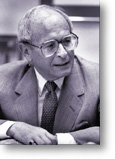 , President of the Health Education Foundation and former director of the National Institute on Alcohol Abuse and Alcoholism.
6-13-2000 Diane Rehm Show "The Balance Within" Dr. Esther Sternberg of the National Institutes of Health describes the medical community's recent breakthroughs in understanding what's known as "the mind-body connection." She joins Diane to talk about her new book, and about the research she and others are conducting on how emotions and health affect each other. Published by W.H. Freeman & Co.
6-9-2000 Diane Rehm Show "The Unwanted Gaze" Law professor and journalist Jeffrey Rosen talks about how, through a combination of technological advances, legal decisions and cultural shifts, the boundaries of privacy in America are changing. He talks about the importance of privacy rights in his new book. Published by Random House.
5-22-2000 Diane Rehm Show "Consolations of Philosophy" Those of us struggling with broken hearts, money woes, or any of the other hardships of everyday life might not think to consult history's greatest philosophers for help. But according to author Alain de Botton (Director of Graduate Philosophy Program, London University), the advice of Socrates, Montaigne, Nietzsche, and other famous thinkers is just as good as -- if not better than -- anything you'll find in the self-help aisle of your local bookstore. He joins Diane to discuss his new book. Published by Pantheon.
5-17-2000 Diane Rehm Show "Ecstacy and other drugs", with Beth Kane Davidson, Director of to Addiction Treatment Center, Suburban Hospital, Bethesda MD; Timothy Condon, Associate Director of the National Institute on Drug Abuse; John Varrone, Office of Investigation, U. S. Customs Service
5-2-2000 Diane Rehm Show "Get Happy: The Life of Judy Garland" by Gerald Clarke. Judy Garland was world-famous for her roles in "The Wizard of Oz," "Easter Parade," "A Star is Born" and many other movie classics. But she wasn't as successful in her private life, as she struggled with many challenges, including failed relationships and drug addiction. Gerald Clarke shares his account of her tumultuous life in a new biography. Published by Random House.
3-31-2000 Public Interest hosted by Kojo Nnamdi: "Noam Chomsky" Kojo is joined by Noam Chomsky ![[Image: Thumbnail of Chomsky]](chomsky-thumb.gif) , the political thinker and professor of linguistics at M.I.T., often called "America's leading dissident intellectual."
, the political thinker and professor of linguistics at M.I.T., often called "America's leading dissident intellectual."
3-30-2000 Public Interest hosted by Kojo Nnamdi: "Madeleine Albright" A conversation with Secretary of State Madeleine Albright. Kojo joins Secretary Albright as she travels to New Orleans for a round of State Department meetings with Foreign Ministers from Caribbean nations.
3-16-2000 Public Interest hosted by Kojo Nnamdi: "Open air drug markets" Shutting down open- air drug markets and ridding the city of the violence that accompanies them is a tremendous challenge. Guests join kojo to discuss the impact of these drug markets on D.C.'s neighborhoods and the actions citizens and public officials are taking in an effort to eliminate them. GUESTS: Lt. Roger Jones, major narcotic branch, D.C. Metropolitan Police Department; Kelvin Esters, member, Pleasant Plain Civic Association; Margaret Poethig, executive director, Policing for Prevention, D. C. Metropolitan Police Department; Wilma Lewis, U.S. Attorney for District of Columbia
3-16-2000 Diane Rehm Show "Technology as a threat to human life" A highly respected information technology expert published an article thisweek saying scientific advances could have an unprecedented negativeimpact on human life within the next two generations. Bill Joy of SunMicrosystems explains why he once believed improvements in softwareand other high-tech products would improve and enhance our existence,and why he now has serious misgivings.
3-7-2000 Diane Rehm Show "Wild Minds" Harvard professor Marc Hauser shares the latest research on animal behavior and psychology in his new book. He joins Diane to discuss whether animals think, feel, and reason, and what a deeper understanding of animal intelligence can teach us about humans. Published by Henry Holt.
3-6-2000 Diane Rehm Show "Synesthesia" As many as one in every 1,000 people has sensory experiences in which a visual, auditory or other stimulus also prompts an experience with another of the five senses. That is, some people "see" sounds, "taste" shapes, or "feel" colors, and these sensations are as real to them as any so- called normal sense perception. Diane and her guests discuss this phenomenon, which is called synesthesia. GUESTS: Dr. Peter Grossenbacher, senior fellow at the National Institute of Mental Health; Carol Crane, psychologist and synesthete.
3-2-2000 Diane Rehm Show "Psychotropic drugs for children" A study just published in the Journal of the American Medical Association reports that the rates at which doctors are prescribing stimulants and antidepressants for children under 4 years of age is rising rapidly. A panel talks about why this is happening and how safe it is for very young children to take mood- and behavior-modifying drugs. GUESTS: Dr. Julie Magno Zito, associate professor of medicine and pharmacy at theUniversity of Maryland School of Pharmacy; Dr. Jean Thomas, psychiatrist in the psychiatry and behavioral sciencedepartment of Children's National Medical CenterDr. Lawrence Diller, behavioral pediatrician and author of the 1998 book, "Running on Ritalin: A Physician Reflects on Children, Society, and Performance in a Pill" (Bantam)
2-4-2000 Diane Rehm Show "Dream Power: How To Use Your Night Dreams To Change Your Life" One night, journalist and therapist Cynthia Richmond went to sleep and had a dream that she wrote a column called "In Your Dreams" for a newspaper. Today her dream is a reality -- she writes about dreams for the Los Angeles Times. She joins guest host Lynn Neary to talk about how everyone can learn and grow by paying close attention to the visions and emotions we experience while asleep. Published by Simon and Schuster.
1-27-2000 Diane Rehm Show "Deadly Persuasion" Author and lecturer Jean Kilbourne discusses the techniques advertisers use to influence consumers. Her new book argues that women and girls are especially susceptible to advertising. Published by Free Press.
1-18-2000 Diane Rehm Show "Nanotechnology" Scientists are now able to manipulate matter at a molecular level and areworking to create tiny mechanisms that have the potential to bring aboutthe next technological revolution. A panel talks about the technology andhow it could transform a range of scientific fields.GUESTS:Carlo Montemagno, professor of bioengineering at Cornell University; Don Eigler, IBM Almaden Research CenterEllen Williams, physics professor at University of Maryland; James Ellenbogan, principal scientist, nanosystems group, Mitre Corporation.
12-16-1999 Diane Rehm Show "High Tech High Touch" As the century comes to a close, father-and-daughter Naisbitts look to the future and how ethical and spiritual concerns may affect our relationship with technology in the coming century. John and Nana Naisbitt join Diane to talk about their new book, which is co-authored by artist Douglas Phillips. Published by Broadway.
12-14-1999 Diane Rehm Show "Cheating" A recent study conducted by "Who's Who Among American High School Students" showed that as many as 80% of high-achieving students admitted to having cheated at least once. A panel talks about academic cheating, honor codes at colleges designed to cut down on cheating, and what the apparently high rate of cheating among students tells us about our culture. GUESTS: Dr. Donald McCabe, professor of organization management at Rutgers University; Dr. Gary Pavela, director of the University of Maryland Office of Judicial Programs and Student Ethical Development; Cabell Vest, former chair of the University of Virginia's Honor Committee.
12-13-1999 Diane Rehm Show "New uses for old drugs" Thalidomide and neomycin are among the familiar drugs that are now being investigated for new applications in the treatment of disease. Viagra and Rogaine among the drugs that became more widely used for their "side" effects than for the primary effect for which they were developed. A panel talks about drug research -- how scientists identify new uses for known drugs, and how they're tested and marketed. GUESTS: Dr. James M. Pluda, senior clinical investigator in the Investigational Drug Branch of the National Cancer Institute; Dr. Jillian Woollett, associate vice president for biotechnology and biologics at Pharmaceutical Reserach and Manufacturers of America; Dr. Robert Temple, director of one of the Food and Drug Administration's Drug Evaluation Offices in the Center for Drug Evaluation and Research.
12-9-1999 Public Interest hosted by Kojo Nnamdi: "Legalized drugs" Drug policy in the United States is a controversial issue, and one that often crosses ideological boundaries. A panel of guests from varied political viewpoints join Kojo to discuss why they support legalization as a means to a saner and safer U.S. drug policy. GUESTS: David Boaz, executive vice president, CATO Institute; Ethan Nadelmann, founder and director of The Lindesmith Center, a drug policy institute; Joycelyn Elders, former Surgeon General of the U.S.
9-8-1999 Diane Rehm Show "Lie Detection" Some individuals are thought to be better than others at detecting lies. But what are the clues that give a liar away? Experts in lie detection talk about machines used to detect lies, how they stack up against experienced deception experts, and why practiced prevaricators can fool both. GUESTS: Dr. Paul Ekman, deception detection expert; Bob Schultz, special agent in charge of the Polygraph Branch of the Bureau of Alcohol, Tobacco, and Firearms; J.J. Newberry, retired ATF agent and director of the Institute for Analytic Interviewing.
8-27-1999 Diane Rehm Show "Your drug may be your problem" Psychiatrist Peter Breggin believes that millions of Americans are taking psychiatric medications that they don't need. In his new book, he shares tips on how to tell if you may be one of them. Published by Perseus.
7-16-1999 Diane Rehm Show "Zen and the Art of Motorcycle Maintenance" For July's Reader's Review, Diane and a panel of readers talk about "Zen and the Art of Motorcycle Maintenance: An Inquiry into Values" a philosophical tale of a cross-country journey that celebrates its 25th anniversary of publication this year. GUESTS: Charley Camp, independent scholar teaching anthropology and folklore at Johns Hopkins University; Francisca Cho, assistant professor of theology at Georgetown University; E. Ethelbert Miller, poet and director of the African American Resource Center at Howard University; Susan Tolchin, professor of public policy at George Mason University.
6-2-1999 Diane Rehm Show "The Wine Advocate" Influential wine critic Robert Parker joins guest host Jim Angle to talk about America's growing interest in wines.
6-1-1999 Diane Rehm Show "Medical use of marijuana" According to revised research guidelines from the National Institute on Drug Abuse, scientists may solicit funding from non-government sources for the study of marijuana. But some Americans are upset that there is still no provision that would allow people to smoke marijuana legally in an attempt to control pain, nausea, vomiting, and certain other problems. A panel talks about the latest battle in the war over medicinal use of marijuana. GUESTS: Lyn Nofziger, campaign consultant and former aide to President Ronald Reagan; Dr. Lester Grinspoon, Associate Clinical Professor of Psychiatry at the Harvard Medical School; Dr. Eric Voth, chairman of the International Drug Strategy Institute.
5-25-1999 Diane Rehm Show "Deep Play" Author Diane Ackerman describes the transcendent, joyful state of mind she calls "deep play," and the ways people try to achieve it, from biking to gardening to bungee jumping. Published by Random House.
5-13-1999 Diane Rehm Show "The Disciplined Mind" Psychologist Howard Gardner changed our understanding of the way people learn with his theory of multiple intelligences. In his new book, he offers his ideas on restructuring the priorities of our educational system. Published by Simon & Schuster.
5-24-1999 Diane Rehm Show "Transforming Madness" Jay Neugeboren's 1997 memoir, "Imagining Robert," was a sensitive portrait of his relationship with his mentally ill brother. In his new book, he looks at the recent advances in medication and psychotherapy that have dramatically changed the lives of people who suffer from mental illness. Published by William Morrow.
4-28-1999 Public Interest hosted by Kojo Nnamdi: "Drug Strategies" Recent studies of alcohol and drug use in the District reveal that drug-related arrests in DC are on the rise and heavy drinking in adults is 50 percent more prevalent here than in the nation on average. Kojo speaks to the president of Drug Strategies, an organization that has recently released a troubling report on the nature of drug use in Washington, D.C. GUESTS: Mathea Falco, president of Drug Strategies; Vincent Gray, Executive Director of Covenant House Washington.
4-8-1999 Diane Rehm Show "Tender at the bone" Bestselling author and psychologist Susan Forward talks about her latest book. It offers advice to women who've been betrayed by the men in their lives. Published by Harper Collins.
4-7-1999 Diane Rehm Show "Police, the media, and privacy" Last week the Supreme Court heard arguments in two cases that could have a major impact on how the news media cover law enforcement actions. In both cases, private citizens say their fourth amendment protection from unreasonable search and seizure was violated when reporters and photographers were allowed to record searches on their private property. Diane hosts a discussion of the free speech and privacy issues that the Supreme Court justices must reconcile. GUESTS: Art Spitzer, legal director for the American Civil Liberties Union of the National Capital Area; Richard Cordray, former Ohio State Solicitor Jay Brown, attorney with Levine Sullivan and Koch specializing in First Amendment cases.
4-5-1999 Diane Rehm Show "Working on God" Journalist Winifred Gallagher discusses the experiences of "neoagnostics" -- people who are skeptical about traditional religions, yet are seeking some form of spiritual guidance. Published Published by Random House.
3-29-1999 Public Interest hosted by Kojo Nnamdi: "Legislating smoking" Controversy over whether or not the government has the right to decide who may smoke and where has heated up as some local governments pass legislation to ban smoking in restaurants and bars. Kojo and panelists talk about the debate between pro and anti regulation advocates. GUESTS: Jeffrey Schaler, editor, "Smoking: Who Has the Right?"; Maury Chafetz , President, Health Education Foundation.
2-11-1999 Diane Rehm Show "When your lover is a liar" Bestselling author and psychologist Susan Forward talks about her latest book. It offers advice to women who've been betrayed by the men in their lives. Published by Harper Collins.
1-29-1999 Diane Rehm Show "The Age of Spiritual Machines: When Computers Exceed Human Intelligence" Diane talks with inventor, futurist and author Ray Kurzweil. In his new book Kurzweil reveals how computers and artificial intelligence will change our lives in the 21st century. Published by Viking.
1-12-1999 Diane Rehm Show "Chocolate" Journalist Joel Glenn Brenner discusses her book "The Emperors of Chocolate" (Random House). She's spent ten years researching the sweet secrets and the bitter competition behind the scenes at Hershey and Mars, America's leading candy producers.
You are visitor #